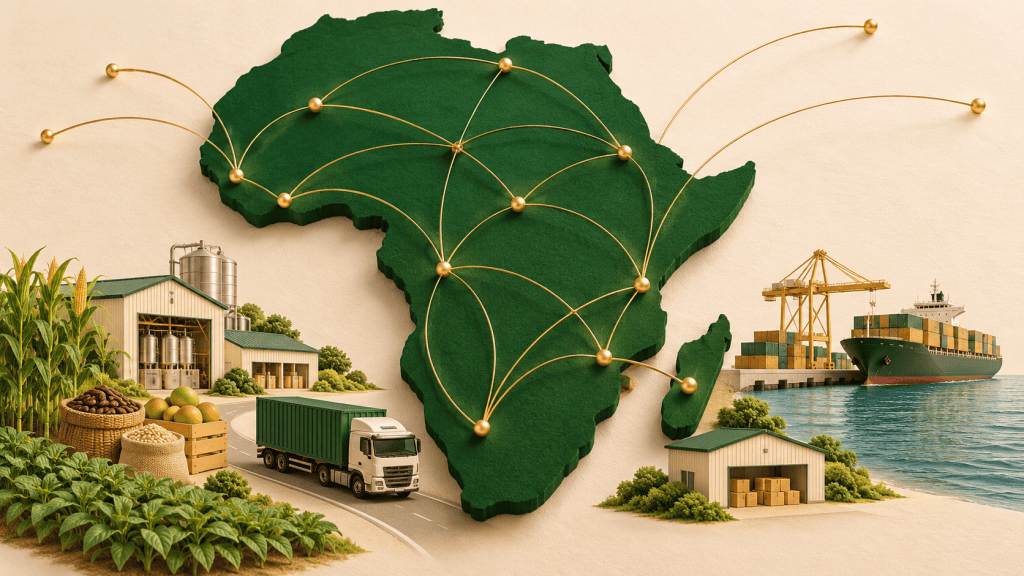
AGOA, bilateral agreements and the AfCFTA
By Isaac Sebakijje
A trade deal should help businesses sell more, create jobs and improve people’s lives. Signing it is only the beginning.
African countries should welcome opportunities to trade with the United States, Europe and other partners. At the same time, those opportunities should help us build stronger businesses and trade more with one another.
That is how I believe we should look at AGOA, agreements between individual countries and the African Continental Free Trade Area, known as the AfCFTA. Each can help. The real test is what African businesses and communities gain from them.
What each arrangement offers
AGOA gives qualifying goods from eligible sub-Saharan African countries preferential access to the US market. It is a US program, so its continuation depends on US legislation. In September 2026, it was extended through December 31, 2028.
I served as Secretary of the former AGOA Southern California Coalition, and I have followed this program for many years. My reading of the extension is simple. It is a window, and a window is not a guarantee. What matters is what African businesses and their partners can build while the window is open, and whether it will still stand when the window closes.
AGOA is not the only door that opened. African governments are signing bilateral agreements with partners worldwide, usually one country at a time.
A bilateral trade agreement is a deal between two partners. It sets terms for trade, such as reducing import taxes or simplifying customs procedures. Each of these agreements opens a real opportunity, and I do not fault any government for taking it. A minister responsible for jobs this year cannot wait for a perfect continental arrangement.
The AfCFTA aims to make trade between African countries easier. It offers a way for businesses to reach more customers across the continent and for countries to build industries together. Making that work requires governments to put the agreed rules into practice.
For a business owner, the question is simple: which arrangement helps me reach customers, and what must I do to use it?
Useful deals should bring lasting benefits
Bilateral agreements may not always be short-term. The US–Morocco Free Trade Agreement has been in force since 2006. Kenya’s trade agreement with the United Kingdom took effect in 2021. Its agreement with the European Union began in 2024 and allows other East African Community countries to join.
These agreements can give businesses valuable opportunities. But an agreement’s age tells us little about how widely its benefits are shared.
Does it help local firms grow? Are workers learning skills they can use for years? Can smaller suppliers win business? Does it encourage more processing and manufacturing within Africa?
My concern is dependence on one buyer, one product or one overseas market. A country needs options, even when its trading relationships are good.
How an overseas opportunity can benefit more of Africa
Imagine a fruit-processing business that wins an overseas order. It buys fruit from local farmers, employs people to process it and pays transporters to move the finished goods.
It might also buy packaging from a neighboring African country and sell some of its products to customers elsewhere on the continent. One export opportunity could support several businesses across borders.
This is the kind of connection I want our trade agreements to encourage. An overseas sale should help build a business that can serve several markets.
The same thinking applies to clothing, mineral processing and other industries. The goal is to create more value from what Africa produces and give more African enterprises a part in that work.
This will not happen simply because a deal has been signed. Suppliers must be able to compete on price, quality and delivery. Businesses need support to meet those requirements.
An open market still needs a ready business
A lower import tax helps, but it does not produce goods or deliver them to a customer.
Exporters still need dependable supplies, trained workers, suitable equipment and money to complete orders. They must meet buyers’ standards, keep accurate records, and deliver at a price that leaves a profit.
There is also a rule worth understanding: a product does not qualify for special treatment just because it was shipped from an African country. Trade agreements have rules about where goods are made and where their materials come from. These are called rules of origin.
The AfCFTA can allow qualifying inputs from participating African countries to count together under its rules. But meeting those rules does not automatically qualify a product under AGOA or another overseas agreement. Each market’s requirements must be checked.
Before investing, an entrepreneur should know who will buy, what they require, what delivery will cost and whether the business can make money. This is why my earlier article on bankable projects placed so much importance on reliable data.
Make the AfCFTA useful in everyday business
I see the AfCFTA as a foundation for Africa’s long-term growth. It can give our businesses a wider market closer to home and more opportunities to work together. A market of 1.4 billion people also negotiates differently from a market of 50 million.
But its promise must become something a business owner can use. That means easier border procedures, clear information, reliable transport and workable ways to receive payment. Preferential trade also depends on the relevant tariff schedules and product rules being in place.
Governments should coordinate with their neighbors and make sure external deals support their regional commitments. Bilateral partners can help by investing in roads, testing facilities, training and supplier development that serve many businesses.
Progress should be measured in practical results: fewer delays, more qualified suppliers and more repeat orders. Smaller firms, women entrepreneurs, young people and landlocked communities need a fair chance to participate.
We should use overseas opportunities while building an African market strong enough to support more of our own growth.
The question I would ask before celebrating a deal
Will this agreement leave our businesses better able to produce, compete and grow?
That question reflects the message in my book, Beyond Aid, Beyond the Debt Trap: Africa’s New Path to Self-Reliance & Global Partnership. Self-reliance means building our ability to prosper while working with others on fair terms.
AGOA and bilateral agreements can help open doors. The AfCFTA is the house those doors should lead into.
Which matters more to your business today? Preferential access to an overseas market, or easier trade with the country next door?
If your company is weighing an entry into African markets, or you are an African exporter preparing for international buyers, I welcome a conversation about your plans. Contact me at contact@isaacsebakijje.com.


Leave a Reply